A is for Anchovy
Welcome to the fish alphabet series. My intentions are for this to be a casual read, which will discuss the spectacular adaptations of a group of ray-finned fish (Actinopterygii) for each letter of the alphabet, explaining their abilities and justifying their awesomeness.
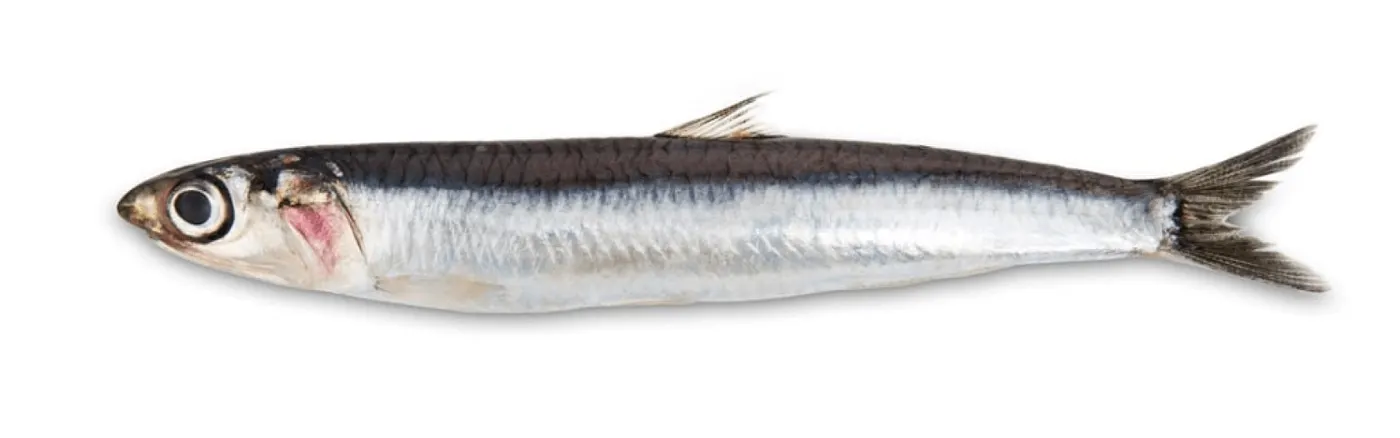
Lifestyle: 7
Adaptations: 6
Relevancy: 8
Uniqueness: 4
Overall - 25/40
Bea, why haven’t you chosen the anglerfish? they’re objectively a more interesting fish, you say. You make a good point. Anglerfish (aka Lophiiformes) are bizarre creatures, defying the norms of the natural world in an environment inhabitable to most. They partake in a natural parabiosis (fusion of 2 living entities) where the tiny male attaches itself onto the much larger female, like a parasite, to reproduce.
Anchovies on the other hand are just tiny insignificant fish, no? No. Fast, efficient, communicative, all traits of a truly incredible, intelligent being. They may not be as unique as anglerfish. But as always, these things are a matter of opinion and up for debate.
Relevancy
Used as pizza toppings, ingredients in Worcester sauce, and even as aphrodisiacs in the Roman times, Anchovies have a historical significance in food culture. They also make the perfect addition to a pasta sauce. Why is this? When an anchovy dies, enzymes in its body naturally start to digest itself. This process is called proteolysis (the breakdown of proteins into smaller peptides & amino acids). The amino acids produced from anchovy proteolysis contribute to its umami taste and overall flavour profile.
However anglerfish cuisine is more widespread than you’d think. Lophiidae is marketed as monkfish or goosefish. It is considered a delicacy, and reaches the equivalency of lobster meat in terms of taste and texture. Whether it is truly delicious or just a class indicator is unclear. Unfortunately, many anglerfish species are sourced from unsustainable fisheries, indicated by Greenpeace International’s seafood red list. The debate around whether sustainable fishing can even exist is an entirely different topic, but this knocks anglerfish cuisine down a notch.
Anchovy 1, Anglerfish 0
. . .
Lifestyle + Adaptations
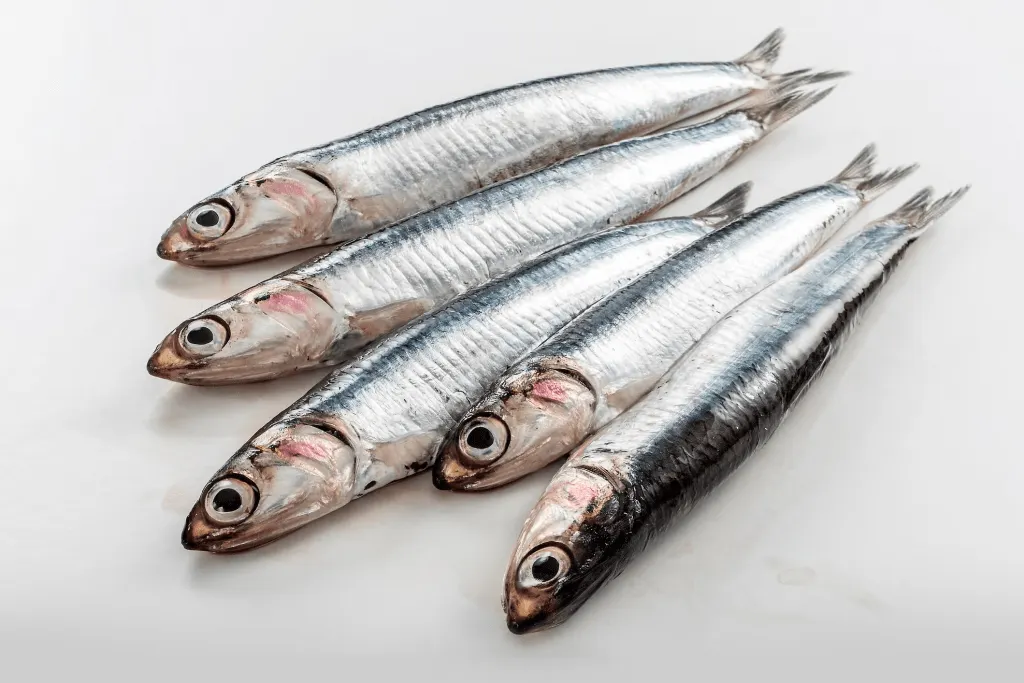
Imagine that you are now an anchovy. You live with your anchovy school in the sunlight zone which (as the name suggests) is lit by the ocean’s largest energy source, the sun. Light is plentiful here on the uppermost ocean layer, with a large proportion reaching a depth of 200m. You can see potential snacks and predators. Between 200–1000m is the twilight zone where only small fragments of light can reach. You may find some plankton floating around here, but you and your anchovy pals prefer the surface where there is more light, and more food as a result.
The sunlight zone is also called the photic zone, as photosynthetic organisms called phytoplankton (e.g. plants and microscopic algae) thrive here in abundance, harnessing the photons from light as energy. Despite being tiny, phytoplankton are indispensible to the marine ecosystem, continuously suppling energy to consumers in the food chain. All ocean life depends on phytoplankton for survival. As a result, the photic zone is the most biodiverse zone of the ocean.
As an anchovy, life here is great. Plankton parties all day, everyday. But were you to be an anglerfish, you sadly could not party here. To understand why, we will look at how the adaptations of aquatic animals (physiological, behavioural, and anatomical) are affected by ocean depth.
Mm-noom-ba-deh
Doom-boom-ba-beh
Doo-boo-boom-ba-beh-beh
Pressure pushin’ down on me
Pressin’ down on you, no man ask for
- the wise words of David Bowie and Freddie Mercury.
As you dive deeper, hydrostatic pressure increases. The deeper you are, the more water particles are surrounding and exerting their force on you. Similar to being crushed by a hydraulic press in all directions. For every 33 feet (10.06 m) you dive, pressure increases by 1 atmosphere. 1km below the surface, hydrostatic pressure is 99.1 times that at sea level. This is higher than the atmospheric pressure of Venus, which is ~90 times that of earth.
Shallow-water fish (like anchovies) have a gas-filled swim bladder which regulates their buoyancy by expanding and contracting depending on ambient pressure. This keeps them afloat but allows diving when needed. As pressure increases, the swim bladder contracts to compress the contained gas. If a fish were to venture too deep, this bladder and other gaseous organs would implode, killing the unfortunate soul.
With a flexible skeleton to withstand high pressures, no swim bladder and minimal gas cavities to reduce buoyancy, the bodies of anglerfish are perfectly adapted for deep waters. They accordingly hang out in the midnight zone, 1–4 km below the ocean surface. While anglerfish are confined to the abyss, floating aimlessly, there’s a plankton rave happening upstairs.

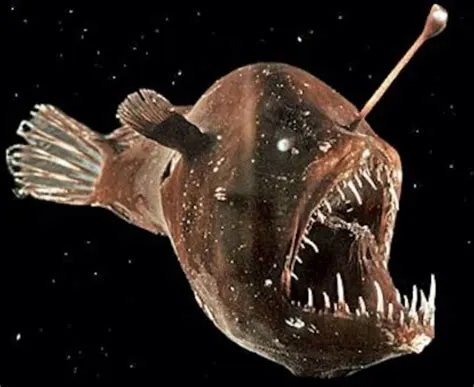
Perhaps that’s why they look so bitter (Jk, I do not like to anthropomorphise). Take this one for instance, bearing her teeth and gaping her jaw to entrap leftover particles raining down from above. These beasts do not lead lavish lifestyles. They take all the scraps they can get, (which is often faecal matter) moving minimally to conserve energy. You might think the anglerfish lifestyle is that of a monk; peaceful, free from the shackles of predation, greed and tireless competition. But anglerfish are also solitary beings that exist in eternal darkness. For a human, there is little down there to live for.
Competition provides meaning to an organisms’ existence, driving the survival of the fittest. Anchovies live in a plenitude of light, friends, food and nutrients. They are efficient swimmers, communicators, and foragers. As for lifestyle, it’s safe to say that anchovies come out on top.
Anchovy 2, Anglerfish 0
. . .
Uniqueness
We can certainly argue that anchovies generally have better lifestyles and are perhaps more valuable to humans than anglerfish. However, there comes a cost to every success.
Living in groups exerts pressure for anchovies to achieve a standardised build. They must conform to the school, predicting and copying their every movement, so that the many can function as a whole. The efficiency of group foraging is high. Grouping can also provide more opportunities for reproduction (A single female produces ~20,000 eggs per year), so individual fitness is high as a result. Selective pressure in the sunlight zone is less harsh than that of the deep, due to the abundance of food and resources and lack of aforementioned pressure. The energetic requirements of an individual anchovy are also very low, due to their size. Therefore anchovies have not needed to develop complex anatomical adaptations, and are greatly distributed worldwide.
Light has 3 fundamental aspects: colour, intensity, and polarisation. If you happen to be a Northern Anchovy, congratulations! You are the only known vertebrate to have a specialised retina that detects polarisation of light. To understand why this makes you so special, we must ask two questions: 1) what on earth is polarisation, and 2) how might detecting it be useful for an aquatic animal?
First and foremost, we must understand the physics. Light from the sun is unpolarised (composed of invisible waves that scatter in all different directions; horizontally, vertically, diagonally etc). When unpolarised light hits the water (a smooth surface), some light reflects, and some passes through the water. This makes light entering the water partially polarised.
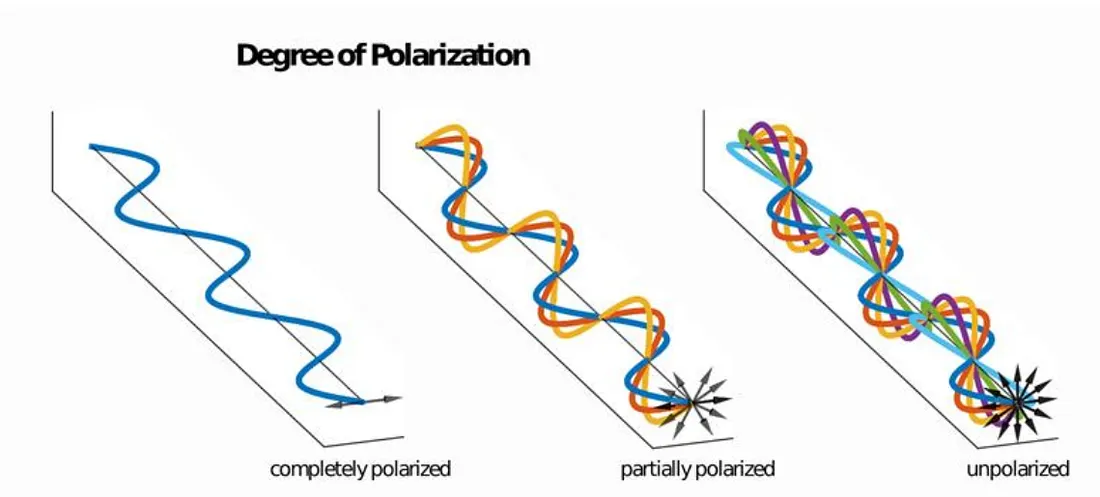
What this means is that there is a lot of polarised light in water. An empty body of water has partially polarised light. As you add more objects to the water, this light becomes less polarised as there are more surfaces for it to bounce off in different directions. Therefore clearer water has a greater degree of polarisation, meaning that light waves are oscillating, more or less, in similar directions. The ability to detect this can result in a behaviour called taxis (which in this context, is movement towards water depending on its degree of clearness).
Unlike you and I, who would just wear polarised sunglasses to reduce glare, the northern anchovies have no need for this. Their retinas are specialised for this exact purpose, closely resembling those of invertebrates such as arthropods and cephalopods, leading scientists to assume the happenings of convergent evolution.
As an anchovy, you have 2 sets of photoreceptors in your eyes that are arranged in stacks, with light-sensitive regions perpendicular to one another like a jenga tower. These structures (called polycones) do wonders for your visual resolution. 1 set allows you to detect light that oscillates horizontally, while the other allows you to detect vertically oscillating light waves.
Recordings of the Northern Anchovy’s optic nerve have shown that the ventro-temporal (VT) retina is polarisation sensitive, a region which in humans is involved in depth perception and binocular vision (i.e. where the visual fields of both eyes overlap). Only 1 light-detection pigment was found here, while 2 were found in the ventro-nasal (VN) region, suggesting the VN is more involved in colour detection while VT independently detects polarised light. To confirm this, the behaviour of anchovies was tested in the same experiment using operant conditioning. They were trained to associate a positive stimulus with blue light, and all gravitated towards blue light over red light when tested. This showed they could differentiate colour. They were then trained to associate 100% polarised light with a positive stimulus, and all chose polarised over non-polarised conditions, exhibiting strange loopy swimming behaviours in non-polarised light.
The integration of both behavioural and neurological approaches provides this evidence with support from both fronts. It demonstrated that anchovies can detect changes in both colour and polarisation, likely due to their specialised retinas. This may aid in anchovy communication. It is also likely this aids in prey detection via phototaxis towards bodies of water where low polarisation indicates plankton abundance. Research has found this unique ability doubles the distance at which they can spot prey. As we cannot see directly through the lens of the anchovy, it is difficult to objectively examine how light polarisation affects anchovy behaviour. The parameters under which this experiment manipulated polarisation were perhaps not representative of polarisation in ocean water where natural accumulation of phytoplanton occurs. A field experiment would be a useful alternative, whereby the polarisation-detecting photoreceptors could be artificially inhibited. Further research like this is needed to determine the exact purpose of this adaptation.
It was difficult to find unique features in the anchovy that were on par with anglerfish. During this process I also realised I’ve been comparing a gregarious species to a solitary one. A school of anchovies may achieve more than a single anglerfish. But what if this was inverse? I realised it is unfair to draw comparisons between such different species, both perfectly suited for the habitat in which they belong. I apologise for not having explored the uniqueness of anglerfish in depth, as this would be far too long. This was supposed to be a defence for anchovies. After a scrupulous search, when I consider the time I have expended finding something to talk about, I believe it is fair to liberate and allow the anchovy to face defeat.
Anchovy 2, Anglerfish 1
. . .

Out of respect for the Lophiiformes, I'll include a rating for numerical comparison.
Lifestyle: 4
Adaptations: 8
Relevancy: 5
Uniqueness: 8
Overall - 25/40
If we are looking purely at the scores (influenced by my personal bias obv) the overall marks for both were tied. I didn't divulge into anglerfish as much as I’d hoped, but my wish is that you leave this page having learned something about either one of these incredible fish.
Thankyou :)
Bea
this article was written entirely by a human.
P.S. pls excuse my lack of citations, I have done my research i promise